Bitwise and Hyperliquid Push SEC to Revise Rules on Token Trading and Airdrops

Bitwise Asset Management and the Hyperliquid Policy Center are seeking clearer guidance from the US Securities and Exchange Commission (SEC) on how crypto assets should be classified and how secondary-market trading should be treated, as the agency’s public comment period draws to a close.
In comment letters submitted Monday, Bitwise Asset Management and the Hyperliquid Policy Center urged the SEC to revise its proposed rules for crypto assets, calling for greater clarity on token classifications, airdrops and secondary-market trading.
Their requests come as the SEC’s public comment period on its proposed Regulation Crypto Assets closes Tuesday. The proposal would establish exemptions for qualifying crypto fundraising and a conditional safe harbor for tokens linked to investment contracts.
In a comment letter dated Oct. 19, Bitwise Asset Management asked the SEC to explain more clearly how investment managers should determine whether a crypto asset falls under securities laws. The firm argued that managers need a standard they can apply based on “publicly available information.”
Bitwise also called for clearer rules on when managers may rely on an issuer’s proposed Form TR filing, which would certify that an investment contract no longer exists, and on how they should evaluate tokens when no such filing has been made.
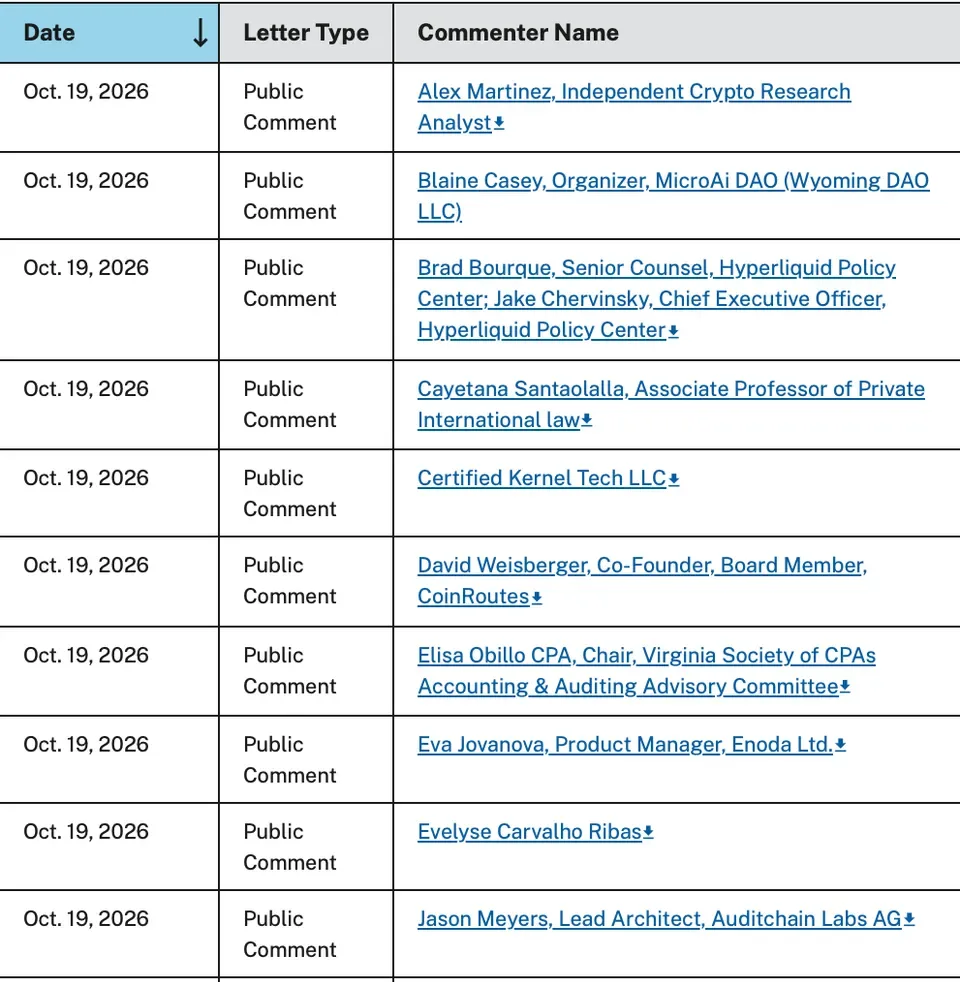
In a separate submission, the Hyperliquid Policy Center urged the SEC to expand the proposed safe harbor, arguing that it might become available too late in a project’s development. The group also called for clearer protections for airdrops that reward participation in a network, along with guidance on token buybacks.
Hyperliquid further cautioned that the proposal “fails to provide clarity” on whether unregistered intermediaries may facilitate token trading or whether tokens can be traded freely through onchain protocols. It urged the SEC to address secondary-market transactions explicitly instead of leaving exchanges and decentralized trading venues exposed to regulatory uncertainty.
SEC proposal faces legal and investor protection objections
While some industry participants are seeking revisions to the proposed rules, former SEC enforcement official John Reed Stark and Duke University finance scholar Lee Reiners have taken an opposing stance. In a comment letter dated Oct. 16, they called on the commission to withdraw the proposal altogether, arguing that it goes beyond the agency’s statutory authority and would undermine investor protections.
Stark and Reiners said existing securities laws, together with the Supreme Court’s Howey test, already provide a framework for regulating crypto offerings. In their view, the proposed fundraising exemptions would weaken investor protections, while the safe harbor could enable issuers to effectively take their tokens outside securities oversight through self-certification.
They also warned that adopting the rules in largely their current form would likely trigger an immediate legal challenge and could ultimately lead to the framework being struck down.
As the public comment period ends Tuesday, the SEC will review the submissions before deciding whether to revise, adopt or withdraw the proposed rules. The commission has not set out a timetable for a final decision. Any final rule would need to be approved by a commission vote before it could take effect.