Bitcoin Recovers From Seven-Week Low Below $76,000 as Democrats Take Both Chambers of Congress

Bitcoin fell to a seven-week low of $75,618 as liquidations of leveraged long positions across the crypto market approached $300 million over a 24-hour period.
Bitcoin (BTC) was attempting to recover from an overnight decline of 3% on Wednesday, as cryptocurrency markets assessed the Democrats’ sweep of the US midterm elections.
• Bitcoin dropped to $75,618 after Democrats secured control of both the House of Representatives and the Senate in the US midterm elections.
• BTC/USD rebounded toward resistance near $78,000, while S&P 500 futures were down 0.3% on Wednesday.
• Analysts cautioned that BTC needs to hold above its 50-week moving average, currently at $75,733, to prevent a deeper correction.
US midterm results trigger a BTC decline below $76,000
TradingView data showed BTC/USD falling into Tuesday’s daily close as election results emerged, with Democrats subsequently taking control of both the House and the Senate. The pair touched $75,618 on Bitstamp, its lowest level since Sept. 16, then recovered to as high as $78,039 within the following three hours.
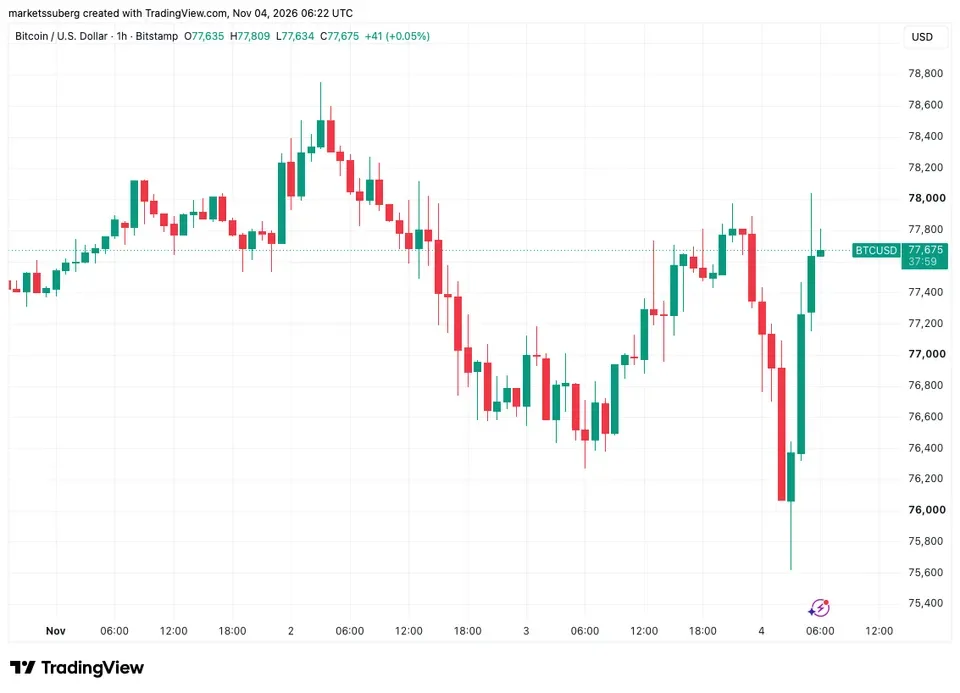
CoinGlass data indicated that the decline liquidated late long positions in BTC below $76,000. At the same time, a substantial cluster of sell orders limited the rebound to levels below $78,000. Total liquidations of crypto long positions over the preceding 24 hours reached $288 million.
BTC liquidation heatmap. Source: CoinGlass

In comments provided to Cointelegraph, Kelly Ye, head of research at institutional digital asset trading platform Talos, said markets had already factored in much of the election result.
“Bitcoin moved about 1.7% after the polls closed, close to the roughly 1.8% options had priced, and there was no major leverage flush. The election was the main event, but markets had largely prepared for it,” she said.
US equity futures followed a similar pattern, declining at first before recovering some of their losses. At the time of writing, futures for both the S&P 500 and Nasdaq 100 were lower by approximately 0.3%.
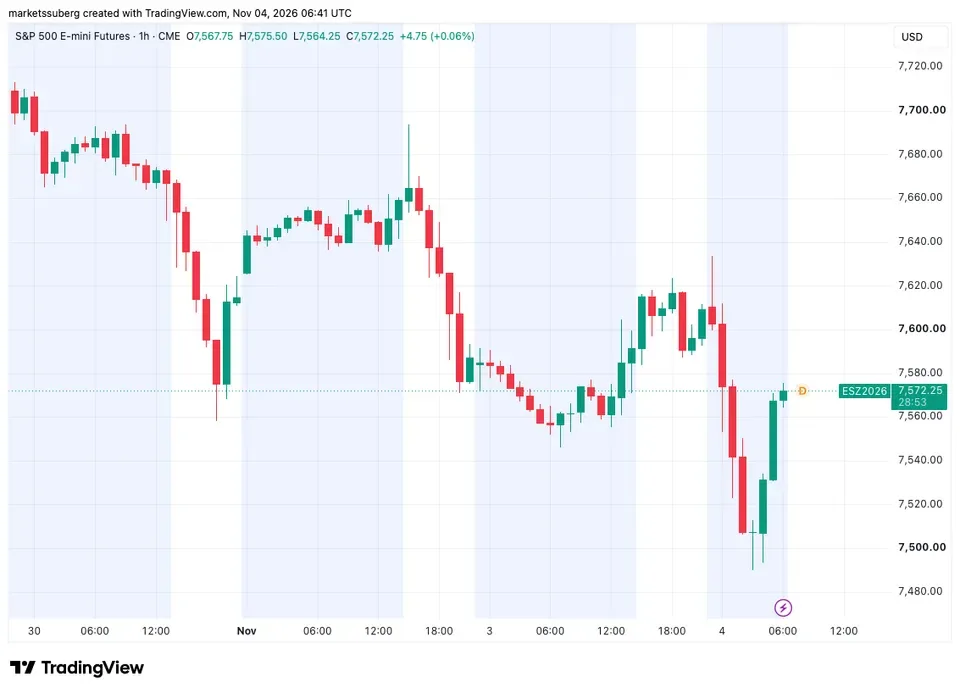
S&P 500 futures one-hour chart. Source: Cointelegraph/TradingView
Late on Tuesday, Anthony Saglimbene, chief market strategist at financial services firm Ameriprise Financial, told CNBC that concerns about data centers and broader artificial intelligence capital spending were prompting a negative market response to Democratic gains.
“If you get some governorships that are Democratic, what does that mean for the data center buildout, which has already seen a lot of skepticism over the last couple weeks in terms of the hyperscaler capex spending?” he asked.
In an interview with The Wall Street Journal, US President Donald Trump, who had previously said he could act as “Mr. Veto” to block Democratic policy initiatives, adopted a conciliatory tone.
“I think we’ll work with the Democrats, and we’ll get along very well with them,” he said.
Bitcoin’s 50-week trend line is crucial to avoiding a “deeper correction”
Bitcoin’s decline to $75,618 coincided with its 50-week simple moving average (SMA), a trend line that has served as support since mid-September.
In an analysis published on X, Keith Alan, co-founder of the crypto trading platform Material Indicators, described the 50-week SMA as a critical threshold for Bitcoin bulls. He argued that a failure to defend this level could leave the market exposed to a “deeper correction ahead.”
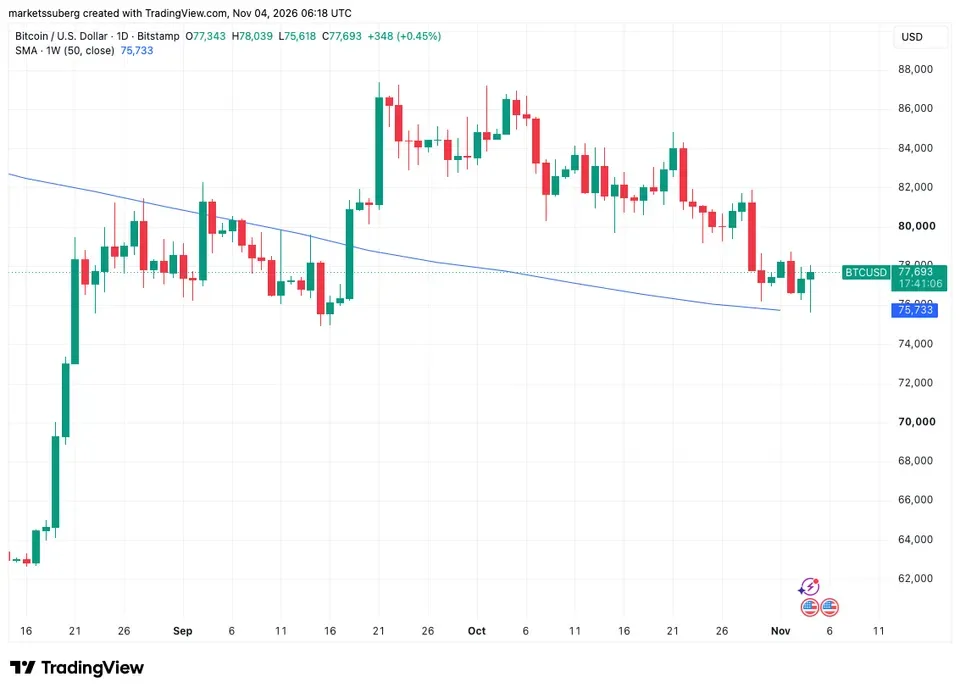
BTC/USD one-day chart with 50 SMA. Source: Cointelegraph/TradingView
Crypto trader and analyst Rekt Capital, who had predicted that BTC/USD would fall below $76,000 after an unsuccessful attempt to break above $78,000, continued to point to overhead resistance on the three-day chart.
“If this continues then these newfound 3-Day Lower Highs may guide price back towards the ~$75.5k level below over time,” he said on Wednesday.
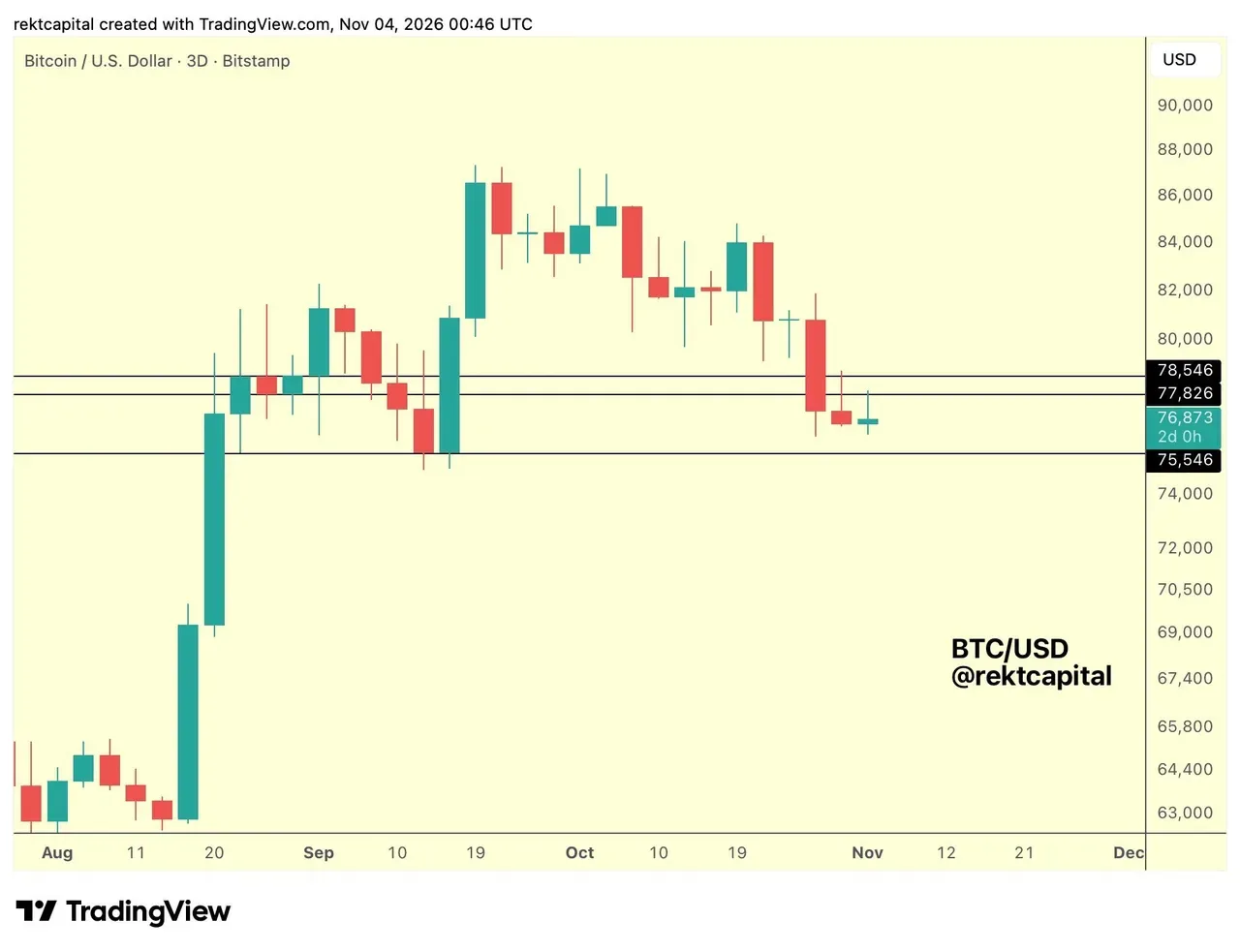
BTC/USD three-day chart. Source: Rekt Capital on X.com